For Linux users in 2026, the best computer mice offer robust plug-and-play compatibility, high-precision sensors, and reliable wireless connectivity. Top choices like the Logitech MX Master 3S and Logitech G Pro X Superlight deliver excellent performance out-of-the-box, often with community-driven software enhancing advanced features. Prioritize mice with strong hardware that minimizes reliance on proprietary Windows/macOS drivers.
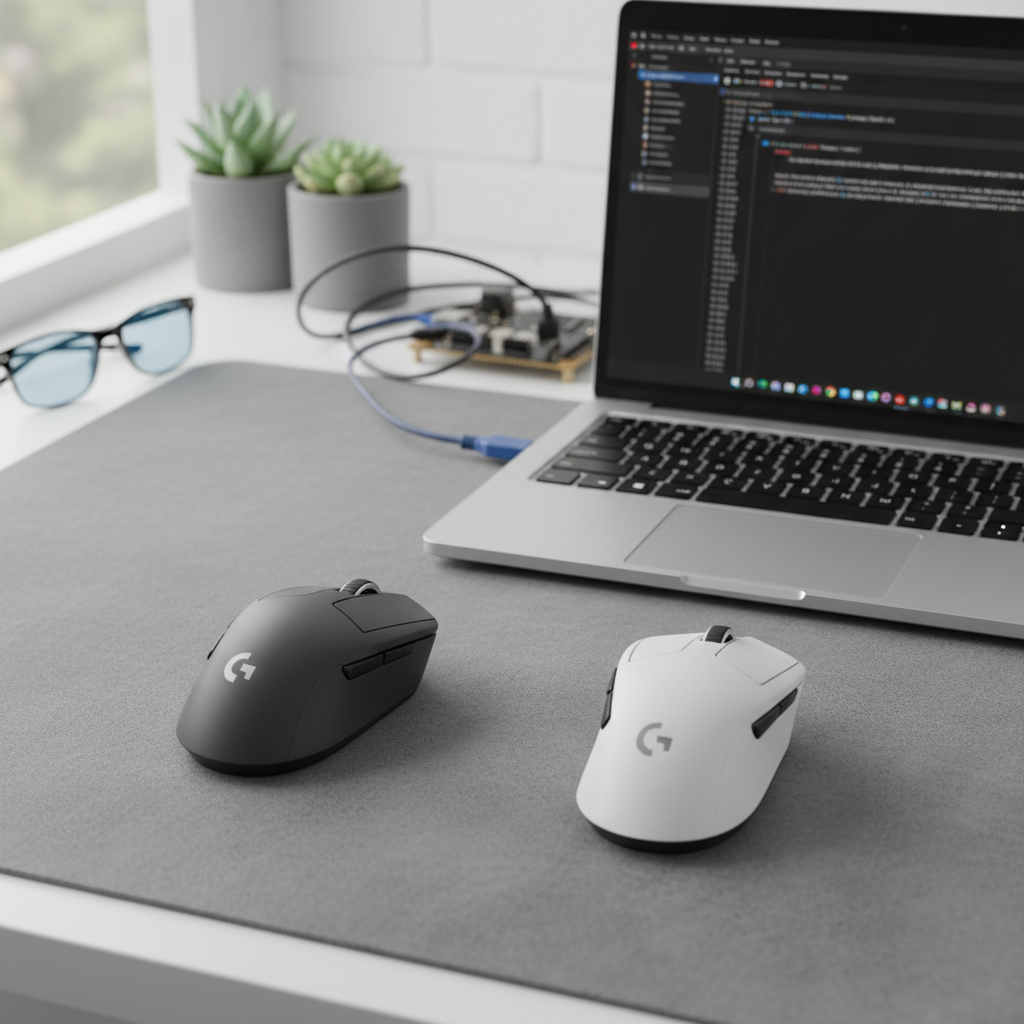
Introduction
Choosing the right computer mouse for your Linux setup in 2026 requires understanding both hardware performance and software compatibility. This guide cuts through the noise, identifying the best mice that offer seamless integration, superior ergonomics, and high-level performance without proprietary driver headaches.
Why is Linux Mouse Compatibility Different in 2026?
Unlike Windows or macOS, Linux distributions often rely on generic HID (Human Interface Device) drivers or open-source community efforts. While most basic mouse functions work universally, advanced features—like gesture buttons, complex macros, or specific DPI profiles—typically require vendor-specific software. In 2026, this landscape still means some high-end mice, designed with Windows-centric software in mind, might not offer their full potential on Linux without third-party tools.
Understanding Driver Dependencies
|
Our Picks for the Best Computer mouse in 2026
As an Amazon Associate I earn from qualifying purchases.
|
||
| Num | Product | Action |
|---|---|---|
| 1 | Amazon Basics 2.4 Ghz Wireless Optical Computer Mouse with USB Nano Receiver, Black |

|
| 2 | Logitech M510 Wireless Mouse, 2.4 GHz with USB Unifying Receiver, 1000 DPI Laser-Grade Tracking, 7-Buttons, 24-Months Battery Life, PC/Mac/Laptop - Graphite |
|
| 3 | Redragon M997 Magnesium Alloy Wireless Gaming Mouse, Tri-Mode BT & 2.4GHz, Ultra Lightweight Ergonomic Mouse, 1000Hz, Rechargeable for PC Laptop, Starlight Black |
|
| 4 | Logitech MX Master 4, Ergonomic Wireless Mouse with Advanced Performance Haptic Feedback, Ultra-Fast Scrolling, USB-C Charging, Bluetooth, Windows, MacOS - Graphite |
|
| 5 | Wireless Bluetooth Mouse, Rechargeable, LED, Silent, Ultra-thin Design (Bluetooth 5.2 and 2.4GHz USB Receiver) | Portable Computer Mouse for Laptops, iPads, MacBooks and Apple Devices (Black) |
|
| 6 | TECKNET Ergonomic Mouse, Wireless Vertical Mouse, 4800 DPI, Rechargeable Bluetooth Mice for Carpal Tunnel Right Hand, 3-Device Connectivity for Laptop, PC, MacBook, Black |
|
| 7 | acer Wireless Mouse for Laptop, 2.4GHz Computer Mouse 3 Adjustable DPI Office Cordless USB Mice with USBA Receiver, 6 Buttons, 1600 DPI, Medium to Large Sized Hands Compatible with PC, Laptop, Desktop |
|
| 8 | Logitech M185 Wireless Mouse, 2.4GHz with USB Mini Receiver, 12-Month Battery Life, 1000 DPI Optical Tracking, Ambidextrous PC/Mac/Laptop - Swift Grey |
|
| 9 | Logitech B100 Wired Mouse for Computer and Laptop, USB Corded Mouse, Right or Left Hand Use - Black |
|
| 10 | Amazon Basics 3-Button USB Wired Mouse with Responsive Tracking, Plug & Play, Compatible with Windows and Mac, Black |
|
Many premium mice ship with powerful customization software (e.g., Logitech Options+, Razer Synapse). These applications are almost exclusively Windows or macOS native. For Linux users, this means relying on the mouse’s default hardware configuration or leveraging open-source projects like Solaar (for Logitech), Piper/libratbag (for various brands), or OpenRazer/Polychromatic (for Razer devices) to unlock deeper customization. These community tools are powerful but require some setup and might not support every single feature.
Wayland vs. Xorg Considerations
The transition from Xorg to Wayland as the default display server on many Linux distributions continues in 2026. While basic mouse input is generally unaffected, specific input device configurations or advanced gesture recognition might behave differently between the two. Most modern mice are designed to be agnostic to the display server, but it’s a factor to consider if you experience unusual input behavior with very specialized mouse functions.
Which Key Features Define a Great Linux Mouse?
Selecting a mouse for Linux goes beyond basic click-and-scroll. In 2026, several features stand out for their impact on productivity, gaming, and overall user experience.
Sensor Precision and DPI Range
A high-quality optical or laser sensor is paramount. Look for mice with a wide DPI (dots per inch) range, typically from 200 up to 26,000+ DPI for gaming mice. This allows for fine-tuned cursor control across various screen resolutions and tasks. A smooth, consistent tracking experience, even on diverse surfaces, indicates a superior sensor.
Connectivity Options: Wireless Reliability
Wireless mice dominate the market in 2026. Consider both 2.4GHz USB dongle connectivity and Bluetooth Low Energy (BLE).
- 2.4GHz Wireless (Dongle): Offers lower latency and a more stable connection, often preferred for gaming or critical tasks. Generally plug-and-play with Linux.
- Bluetooth LE: Convenient for multi-device setups, reducing USB port usage. Modern Bluetooth 5.0+ mice offer excellent stability, though occasional pairing quirks can occur with some Linux Bluetooth stacks.
- Wired: Still the most reliable for zero-latency, no-battery-hassle performance, but less common for productivity mice.
Ergonomics and Build Quality
Comfort directly impacts long-term productivity and health. Look for mice that fit your hand size and grip style (palm, claw, fingertip). Ambidextrous designs, vertical mice, and contoured shapes cater to different needs. Durable materials and robust click mechanisms ensure longevity. Weight is also a factor; lighter mice are preferred for rapid movements, while heavier mice offer more stability.
Programmable Buttons and Scroll Wheels
While full software customization might be limited on Linux, mice with multiple physical buttons and versatile scroll wheels (e.g., horizontal scroll, free-spinning modes) still offer inherent advantages. Many basic extra buttons will map to standard functions (back/forward) without special drivers. A high-quality scroll wheel provides precise control for documents and web browsing.
Battery Life
For wireless mice, exceptional battery life is a significant convenience. Many modern mice offer weeks or even months of use on a single charge, or feature fast charging capabilities. USB-C charging is now standard, simplifying cable management.
What are the Top Computer Mice for Linux Users in 2026?
Based on compatibility, performance, and user feedback, these mice consistently deliver for Linux users.
Best Overall & Productivity: Logitech MX Master 3S
The Logitech MX Master 3S remains an industry benchmark. Its ergonomic design, MagSpeed electromagnetic scroll wheel, and Darkfield sensor (tracking on glass) are exceptional. Out-of-the-box, basic functions work flawlessly on Linux. For advanced customization of its numerous buttons and gestures, the community-driven Solaar project provides robust control, making it the most feature-rich option for Linux power users. Battery life is stellar, often lasting 70 days on a full charge.
Best for Gaming: Logitech G Pro X Superlight 2
For competitive gamers on Linux, the G Pro X Superlight 2 is a top contender. Weighing just 60g, it features Logitech’s HERO 2 sensor with up to 32,000 DPI and a blazing 2000Hz polling rate. Its minimalist design ensures universal compatibility; core functions perform perfectly. While Logitech G HUB software is Windows/macOS only, the mouse’s onboard memory allows you to configure DPI settings on a Windows machine once, then use them on Linux. Community projects for deeper customization are emerging.
Best Performance Gaming Alternative: Razer DeathAdder V3 Pro
The DeathAdder V3 Pro offers a classic ergonomic shape combined with Razer’s Focus Pro 30K Optical Sensor and HyperPolling Wireless technology (up to 4000Hz with an optional dongle). Its lightweight design (63g) and excellent click latency make it a gaming powerhouse. Linux users benefit from the OpenRazer and Polychromatic projects, which allow for extensive customization of DPI, lighting, and button mapping, bridging the gap left by Razer Synapse.
Best Budget-Friendly & Reliable: Logitech M720 Triathlon
The Logitech M720 Triathlon excels in versatility and value. It connects via both 2.4GHz Unifying Receiver and Bluetooth, allowing seamless switching between up to three devices. Its battery lasts up to 24 months on a single AA battery. While not as feature-rich as the MX Master series, its robust build and excellent multi-device support make it an ideal, no-fuss choice for Linux users seeking reliability on a budget. Solaar provides good support for its basic programmable buttons.
Best Ergonomic & Unique: Microsoft Sculpt Ergonomic Mouse
For users prioritizing comfort and a unique design, the Microsoft Sculpt Ergonomic Mouse stands out. Its distinctive shape promotes a natural hand posture, reducing strain. It connects via a 2.4GHz USB dongle and offers reliable plug-and-play functionality on Linux for its primary buttons and scroll wheel. While its “blue track” sensor is not as high-DPI as gaming mice, it’s perfectly adequate for productivity tasks and tracks well on most surfaces.
Comparing Top Linux-Compatible Mice: A 2026 Overview
| Feature | Logitech MX Master 3S | Logitech G Pro X Superlight 2 | Razer DeathAdder V3 Pro | Logitech M720 Triathlon | Microsoft Sculpt Ergonomic |
|---|---|---|---|---|---|
| Category | Productivity/Ergonomic | Gaming (Competitive) | Gaming (Performance) | Productivity/Multi-Device | Ergonomic/Productivity |
| Sensor Max DPI | 8,000 DPI (Darkfield) | 32,000 DPI (HERO 2) | 30,000 DPI (Focus Pro 30K) | 1,000 DPI (Optical) | 1,000 DPI (BlueTrack) |
| Connectivity | 2.4GHz (Logi Bolt), Bluetooth LE | 2.4GHz (LIGHTSPEED) | 2.4GHz (HyperSpeed) | 2.4GHz (Unifying), Bluetooth LE | 2.4GHz (USB Dongle) |
| Programmable Buttons | 7 (with gestures) | 5 | 6 | 8 | 4 |
| Linux Software Support | Excellent (Solaar) | Limited (Onboard Memory) | Excellent (OpenRazer/Polychromatic) | Good (Solaar) | Basic Plug-and-Play |
| Battery Life | Up to 70 days | Up to 95 hours | Up to 90 hours | Up to 24 months (AA) | Up to 12 months (AA) |
| Weight | 141g | 60g | 63g | 135g | 155g |
How Does Linux Software Enhance Mouse Functionality?
While many high-end mice offer basic functionality on Linux out of the box, specialized community-driven software unlocks their full potential.
Solaar for Logitech Devices
Solaar is an indispensable tool for Logitech Unifying and Logi Bolt receivers, and many Bluetooth devices. It allows Linux users to configure DPI, manage pairing, check battery status, and customize most programmable buttons on compatible Logitech mice and keyboards. For MX Master series users, Solaar enables configuration of the horizontal scroll wheel and gesture buttons, mirroring much of Logitech Options+’s functionality.
Piper and Libratbag
Piper is a graphical front-end that uses libratbag as its backend. This combination provides a unified interface for configuring gaming mice from various manufacturers, including SteelSeries, Roccat, and some Logitech G-series models. You can adjust DPI stages, polling rates, LED lighting, and button assignments. It’s a powerful solution for gamers who need granular control over their peripherals on Linux.
OpenRazer and Polychromatic
For Razer peripheral owners, OpenRazer is a collection of open-source drivers, and Polychromatic is its user-friendly graphical interface. Together, they allow Linux users to control RGB lighting, set DPI levels, manage macros, and configure button mappings for a wide range of Razer mice. This significantly enhances the experience for Razer users who would otherwise be locked out of advanced features without Razer Synapse.
Frequently Asked Questions
Does every mouse work on Linux?
Almost all basic mice (two buttons, scroll wheel) work perfectly on Linux as plug-and-play devices using generic HID drivers. Issues typically arise with advanced features like specific gesture buttons, high-DPI customization, or RGB lighting control that rely on proprietary Windows/macOS software.
Do I need special drivers for my gaming mouse on Linux?
For basic functionality (movement, clicks), no. For advanced features like custom DPI stages, high polling rates, RGB lighting, or macro programming, you will likely need community-driven open-source software like Piper/libratbag or OpenRazer/Polychromatic, as official vendor drivers are rarely provided for Linux.
Can I use a Bluetooth mouse with Linux?
Yes, most modern Bluetooth mice are compatible with Linux. Ensure your Linux distribution has a working Bluetooth stack (like BlueZ) and a graphical Bluetooth manager. Performance and stability are generally excellent, especially with Bluetooth 5.0+ mice, though occasional pairing issues can occur with specific hardware configurations.
What is the “best” DPI setting for Linux?
There is no single “best” DPI setting; it’s highly personal. For productivity, 800-1600 DPI is common. For gaming, many prefer 400-800 DPI for precision, while others use higher settings (1600-3200+) for faster screen traversal. The best mouse will offer a wide DPI range, allowing you to find your optimal setting.
Are vertical mice compatible with Linux?
Yes, vertical mice generally function as standard HID devices, meaning their basic movement and clicks will work out of the box on Linux. Any extra programmable buttons might require community software if they don’t default to standard back/forward functions.
Conclusion
In 2026, Linux users have an excellent selection of computer mice that deliver on both compatibility and performance. While proprietary software remains a Windows/macOS domain, robust community projects like Solaar, Piper, and OpenRazer bridge the gap, allowing full customization for many popular models. Prioritize mice with strong hardware foundations—excellent sensors, reliable connectivity, and ergonomic designs—and you’ll find a seamless, productive experience on your Linux desktop.