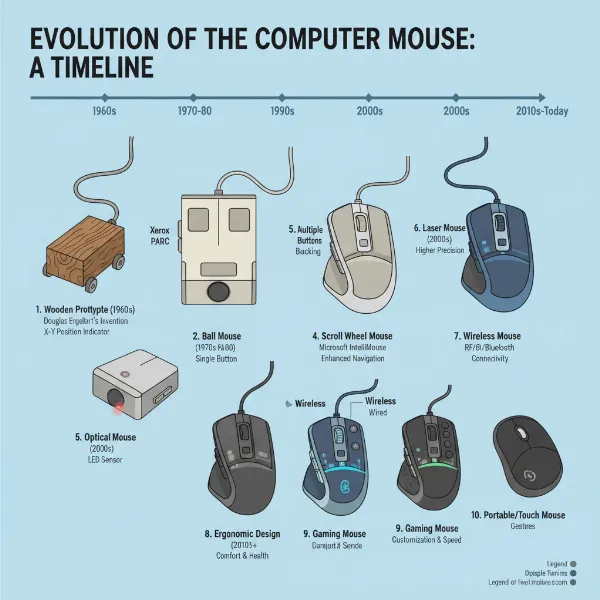
Choosing a computer mouse for a standing desk in 2026 means prioritizing ergonomic design, advanced wireless connectivity, and customizable features. Look for vertical or trackball mice to prevent strain, ensure seamless multi-device Bluetooth LE 5.x or 2.4GHz connectivity, and demand high-DPI sensors with programmable buttons for optimal productivity and comfort.
Introduction
Adopting a standing desk posture significantly impacts your interaction with peripherals. A standard mouse, designed for seated use, often falls short in ergonomics and efficiency when you’re standing for extended periods. Selecting the right mouse is not just about comfort; it’s a critical investment in your long-term health and productivity.
What Makes a Mouse “Standing Desk Ready” in 2026?
The ideal mouse for a standing desk in 2026 integrates several key characteristics that enhance comfort, control, and efficiency. These features address the unique demands of an upright workstation, minimizing strain and maximizing workflow.
Ergonomic Design is Paramount
|
Our Picks for the Best Computer mouse in 2026
As an Amazon Associate I earn from qualifying purchases.
|
||
| Num | Product | Action |
|---|---|---|
| 1 | Logitech M185 Wireless Mouse, 2.4GHz with USB Mini Receiver, 12-Month Battery Life, 1000 DPI Optical Tracking, Ambidextrous PC/Mac/Laptop - Swift Grey |

|
| 2 | TECKNET Ergonomic Mouse, Wireless Vertical Mouse, 4800 DPI, Rechargeable Bluetooth Mice for Carpal Tunnel Right Hand, 3-Device Connectivity for Laptop, PC, MacBook, Black |
|
| 3 | Amazon Basics 2.4 Ghz Wireless Optical Computer Mouse with USB Nano Receiver, Black |
|
| 4 | acer Wireless Mouse for Laptop, 2.4GHz Computer Mouse 3 Adjustable DPI Office Cordless USB Mice with USBA Receiver, 6 Buttons, 1600 DPI, Medium to Large Sized Hands Compatible with PC, Laptop, Desktop |
|
| 5 | Logitech B100 Wired Mouse for Computer and Laptop, USB Corded Mouse, Right or Left Hand Use - Black |
|
| 6 | Amazon Basics 3-Button USB Wired Mouse with Responsive Tracking, Plug & Play, Compatible with Windows and Mac, Black |
|
| 7 | Logitech M510 Wireless Mouse, 2.4 GHz with USB Unifying Receiver, 1000 DPI Laser-Grade Tracking, 7-Buttons, 24-Months Battery Life, PC/Mac/Laptop - Graphite |
|
| 8 | Logitech MX Master 4, Ergonomic Wireless Mouse with Advanced Performance Haptic Feedback, Ultra-Fast Scrolling, USB-C Charging, Bluetooth, Windows, MacOS - Graphite |
|
| 9 | Wireless Bluetooth Mouse, Rechargeable, LED, Silent, Ultra-thin Design (Bluetooth 5.2 and 2.4GHz USB Receiver) | Portable Computer Mouse for Laptops, iPads, MacBooks and Apple Devices (Black) |
|
| 10 | Redragon M997 Magnesium Alloy Wireless Gaming Mouse, Tri-Mode BT & 2.4GHz, Ultra Lightweight Ergonomic Mouse, 1000Hz, Rechargeable for PC Laptop, Starlight Black |
|
Traditional mice often force the wrist into an unnatural pronated position. For standing desk users, this posture, sustained over hours, exacerbates wrist and forearm fatigue. Vertical mice, trackball mice, and highly contoured designs are essential. Vertical mice typically position your hand in a “handshake” grip, reducing pronation. Trackball mice eliminate arm movement entirely, beneficial for limited desk space or shoulder issues. Contoured designs, like the Logitech MX Master 3S, provide ample palm support and natural button placement, mitigating strain.
Seamless Wireless Connectivity
A wired mouse introduces cable management issues at a standing desk, especially when adjusting height. Wireless connectivity is non-negotiable. In 2026, this means robust Bluetooth LE 5.x for multi-device pairing and energy efficiency, or a low-latency 2.4GHz USB dongle connection for critical tasks. Look for models supporting both, offering flexibility and reliability. Features like Logitech Flow allow seamless cursor movement and file transfer across multiple computers, a significant productivity booster.
Precision and Customizable Control
High-DPI (dots per inch) sensors are crucial for navigating large monitors or multi-monitor setups common in modern workspaces. A mouse with an adjustable DPI range, often 200-8000 DPI or higher, allows you to fine-tune sensitivity. Programmable buttons, paired with intuitive software, enable custom shortcuts and macros. This dramatically reduces repetitive clicks and keystrokes, enhancing efficiency for complex applications from graphic design to data analysis.
Extended Battery Life and Quick Charging
The last thing you need is a dead mouse mid-task. Modern standing desk mice offer exceptional battery life, often lasting weeks or months on a single charge. USB-C fast charging is standard, allowing hours of use from a quick minute or two of charging. Some models even feature wireless charging compatibility (Qi standard), simplifying power management further.
Durability and Build Quality
A mouse for daily professional use must withstand constant handling. Look for quality materials, robust scroll wheels, and switches rated for millions of clicks. A solid build minimizes flex and ensures longevity, a critical factor for an investment in your workspace.
Quiet Clicks for Focused Environments
In open-plan offices or shared home workspaces, loud mouse clicks can be distracting. Many 2026 models feature silent click technology, reducing click noise by up to 90% compared to traditional mice, fostering a more peaceful work environment.
How Do Ergonomic Mouse Designs Impact Standing Desk Users?
Ergonomics is not a luxury; it’s a necessity for standing desk users. The prolonged periods of computing demand peripherals that support natural body posture, preventing repetitive strain injuries (RSIs) like carpal tunnel syndrome or cubital tunnel syndrome.
Vertical Mice: The Handshake Grip Advantage
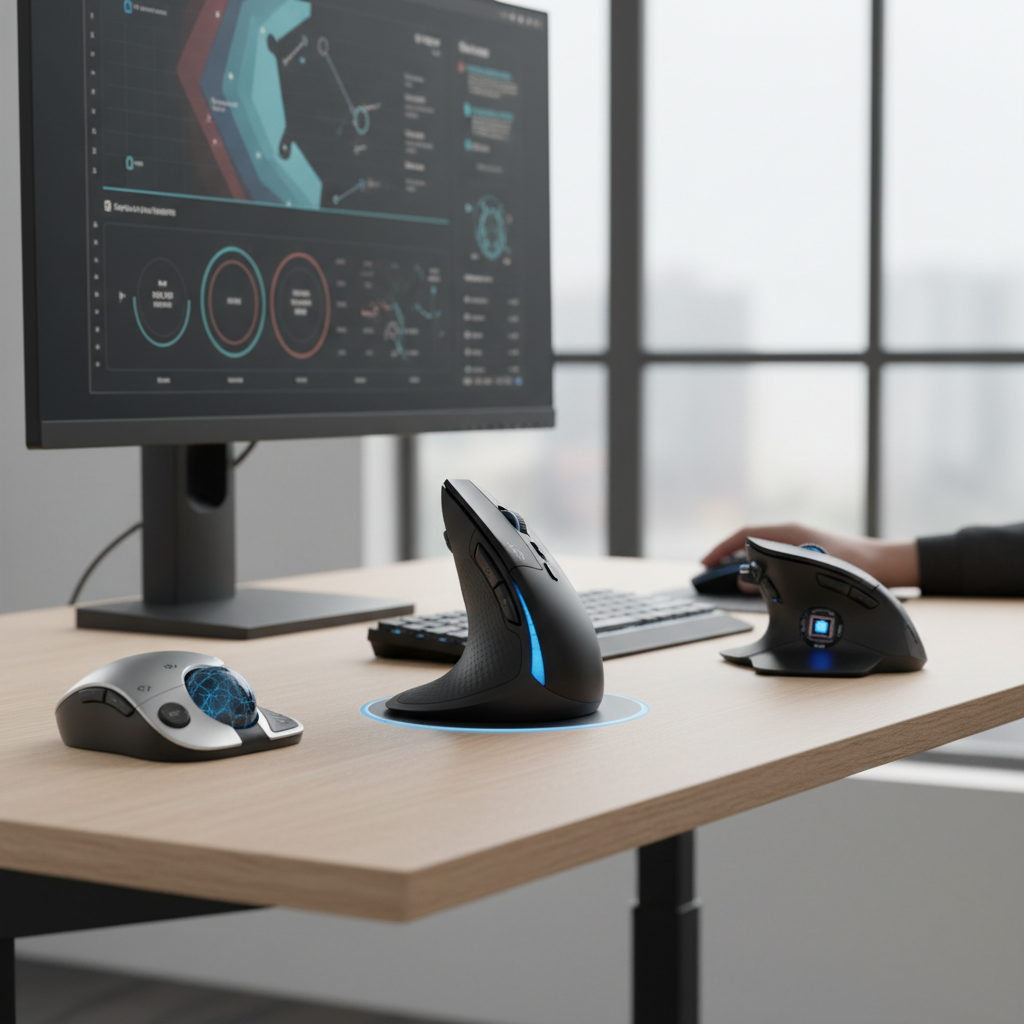
Vertical mice, such as the Logitech MX Vertical or Evoluent VerticalMouse series, reorient your hand into a neutral “handshake” position. This design eliminates forearm pronation, a major contributor to wrist and arm discomfort. By aligning the bones and tendons of your forearm and wrist more naturally, vertical mice significantly reduce pressure on the median nerve. This is particularly beneficial for those experiencing existing wrist pain or seeking proactive prevention.
Trackball Mice: Minimal Movement, Maximum Control
Trackball mice, like the Logitech MX Ergo or Kensington Expert Mouse, keep your hand stationary while your thumb or fingers manipulate a ball to control the cursor. This design is excellent for reducing shoulder and arm movement, making it ideal for users with limited desk space, shoulder pain, or those who prefer precise, fine motor control without moving the entire arm. The learning curve can be steep for some, but the long-term benefits in reduced arm strain are substantial.
Contoured and Traditional Ergonomic Mice: Balanced Support
While not as radical in design as vertical or trackball options, highly contoured ergonomic mice still offer significant benefits. Models like the Razer DeathAdder V3 Pro or Microsoft Sculpt Ergonomic Mouse provide a comfortable palm rest and natural button placement, reducing the need to grip the mouse tightly. They support the natural curvature of your hand, distributing pressure more evenly and preventing strain associated with flat, symmetrical mice. These are often a good transition point for users not ready for a full vertical or trackball experience but still seeking enhanced comfort.
Consider your hand size and grip style when choosing. A mouse that fits your hand well is crucial for sustained comfort.
- Palm Grip: Hand rests fully on the mouse; requires a larger, more contoured mouse.
- Claw Grip: Fingers arched, only fingertips and base of palm touch; can suit various mouse shapes.
- Fingertip Grip: Only fingertips touch the mouse; often benefits from lighter, smaller mice.
What Wireless Technologies Are Essential for Standing Desk Mice in 2026?
Wireless technology has evolved beyond simple untethering; it’s about seamless, reliable, and efficient connectivity crucial for dynamic standing desk setups.
Bluetooth LE 5.x: Multi-Device Mastery
Bluetooth Low Energy (LE) 5.x is the standard for modern wireless mice. It offers superior energy efficiency, extending battery life significantly. Crucially, Bluetooth LE 5.x supports multi-device pairing and rapid switching, allowing you to connect your mouse to a laptop, desktop, and even a tablet, then switch between them with a single button press. This capability is invaluable in a flexible workspace where you might use multiple devices throughout the day without needing separate peripherals.
2.4GHz USB Dongle: Uncompromised Performance
For scenarios demanding the absolute lowest latency and most stable connection, such as competitive gaming or precision design work, a 2.4GHz USB dongle remains the gold standard. Technologies like Logitech’s Lightspeed or Razer’s Hyperspeed ensure a near-wired experience, eliminating any perceptible lag. Many premium standing desk mice offer a dual-connectivity option, allowing you to choose between Bluetooth for convenience and 2.4GHz for peak performance.
Seamless Device Switching (e.g., Logitech Flow)
Beyond simple pairing, advanced software suites like Logitech Flow allow your mouse to intelligently move between up to three computers, even across different operating systems, as if they were a single desktop. This feature, combined with the ability to copy and paste text, images, and files between machines, dramatically streamlines workflows in a multi-device environment. This level of integration is a significant differentiator for high-end standing desk mice in 2026.
Which Advanced Features Boost Productivity at a Standing Desk?
Beyond basic functionality, several advanced features can transform your standing desk experience from merely functional to exceptionally productive.
High-DPI Sensors with On-the-Fly Adjustment
Modern sensors offer incredible precision, often reaching 8000 DPI or more. For users with large high-resolution monitors (e.g., 4K, ultrawide), high DPI allows rapid cursor movement across the screen with minimal physical effort. The ability to adjust DPI on-the-fly, via a dedicated button, is critical. This lets you quickly switch from high sensitivity for general navigation to lower sensitivity for precise tasks like photo editing or CAD work, all without leaving your workflow.
Customizable Buttons and Intelligent Software
Most premium mice offer 5-10 or more programmable buttons. Paired with robust customization software (e.g., Logitech Options+, Razer Synapse), you can assign macros, application-specific shortcuts, or specific commands to each button. Imagine a button to instantly mute your microphone in a video call, or another to open your most-used application. This level of customization significantly reduces reliance on keyboard shortcuts, streamlining complex tasks.
Innovative Scroll Wheel Technologies
The scroll wheel is no longer just for scrolling. Features like Logitech’s MagSpeed electromagnetic scrolling offer two modes: a precise ratcheted mode for line-by-line accuracy and a hyper-fast free-spin mode that scrolls thousands of lines in seconds. This adaptive scrolling capability is invaluable for navigating long documents, spreadsheets, or complex web pages, providing both speed and precision as needed.
Multi-Surface Tracking
Not all desks are created equal. High-end sensors, such as Logitech’s Darkfield sensor, can track accurately on virtually any surface, including glass up to 4mm thick. This versatility ensures consistent performance regardless of your desk material or whether you need to use your mouse on an impromptu surface.
Quiet Click Technology
For shared workspaces or late-night sessions, quiet click switches are a game-changer. These dampen the audible click sound significantly, often by over 90%, allowing you to work without disturbing others or yourself. This seemingly minor feature contributes substantially to a more focused and pleasant work environment.
Comparing Top Mouse Categories for Standing Desks
| Mouse Type | Key Ergonomic Benefit | Best For | Example Models (2026 Relevance) |
|---|---|---|---|
| Vertical Mouse | Neutral “handshake” grip, eliminates forearm pronation, reduces wrist strain. | Users with wrist pain, RSI prevention, long work sessions. | Logitech MX Vertical, Evoluent VerticalMouse 4/5, Anker Vertical Ergonomic Mouse |
| Trackball Mouse | Stationary hand/arm, minimal movement, reduces shoulder/arm strain. | Limited desk space, shoulder/elbow pain, precision tasks, graphic design. | Logitech MX Ergo, Kensington Expert Mouse, Elecom Deft Pro |
| Contoured Ergonomic Mouse | Full palm support, natural hand posture, comfortable grip. | General productivity, gaming, users transitioning to ergonomics, large hands. | Logitech MX Master 3S, Razer DeathAdder V3 Pro, Microsoft Sculpt Ergonomic Mouse |
Key Considerations When Choosing Your Standing Desk Mouse
Making the right choice involves evaluating your personal needs, workflow, and physical comfort.
- Hand Size and Grip Style: Ensure the mouse comfortably fits your hand to avoid strain. Try different shapes if possible.
- Primary Tasks: Heavy data entry, graphic design, general browsing, or light gaming all have different mouse requirements.
- Desk Setup: Consider your desk space, monitor size, and whether you use multiple computers.
- Budget: Premium ergonomic mice are an investment, but options exist across various price points. Prioritize ergonomics over flashy features if budget is tight.
- Operating System Compatibility: Most mice are plug-