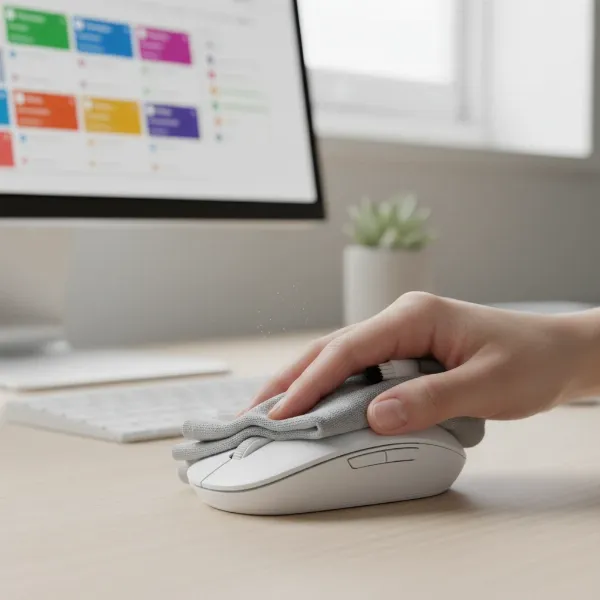
Multi-device computer mice are essential for modern professionals and users juggling multiple screens, systems, and operating environments. These versatile input devices streamline workflows by allowing seamless switching between computers, tablets, and even smartphones with a single click. Investing in a quality multi-device mouse significantly boosts productivity and reduces desktop clutter.
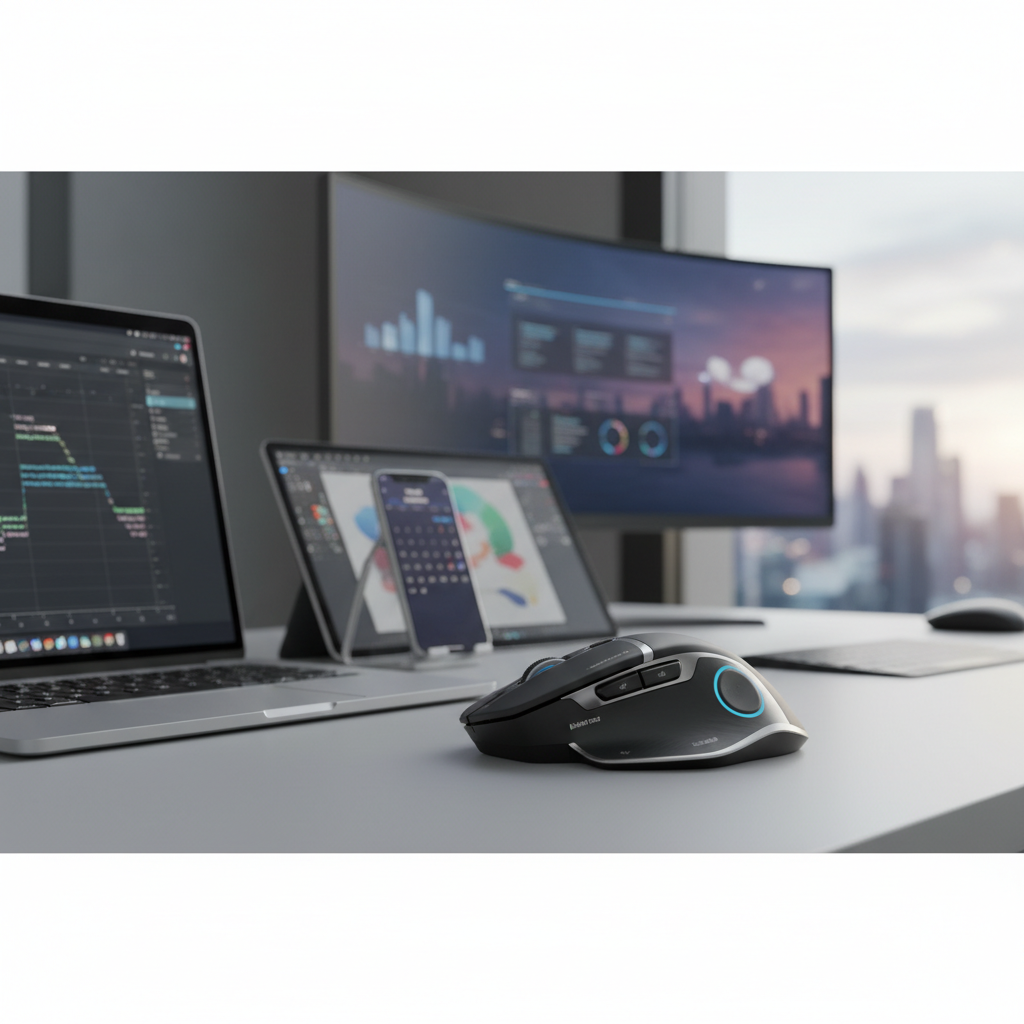
Introduction to Seamless Multi-Device Workflows in 2026
The contemporary digital landscape demands flexibility. As you navigate between your primary desktop, a work laptop, and perhaps a tablet or smart display, switching input devices becomes a major bottleneck. Multi-device computer mice eliminate this friction, offering a singular, ergonomic solution to control multiple systems. This guide explores why these mice are indispensable in 2026 and how to choose the best one for your integrated setup.
What are Multi-Device Mice and Why Do You Need One in 2026?
Multi-device mice are specialized peripherals designed to connect and operate across two, three, or even more distinct computing devices simultaneously. Unlike traditional mice tethered to a single machine, these advanced devices feature built-in technology allowing rapid switching between connected systems. This capability is paramount in 2026’s hybrid work environments and multi-screen personal setups.
The Productivity Imperative
|
Our Picks for the Best Computer mouse in 2026
As an Amazon Associate I earn from qualifying purchases.
|
||
| Num | Product | Action |
|---|---|---|
| 1 | Logitech M185 Wireless Mouse, 2.4GHz with USB Mini Receiver, 12-Month Battery Life, 1000 DPI Optical Tracking, Ambidextrous PC/Mac/Laptop - Swift Grey |

|
| 2 | Amazon Basics 2.4 Ghz Wireless Optical Computer Mouse with USB Nano Receiver, Black |
|
| 3 | Logitech MX Master 4, Ergonomic Wireless Mouse with Advanced Performance Haptic Feedback, Ultra-Fast Scrolling, USB-C Charging, Bluetooth, Windows, MacOS - Graphite |
|
| 4 | acer Wireless Mouse for Laptop, 2.4GHz Computer Mouse 3 Adjustable DPI Office Cordless USB Mice with USBA Receiver, 6 Buttons, 1600 DPI, Medium to Large Sized Hands Compatible with PC, Laptop, Desktop |
|
| 5 | Logitech B100 Wired Mouse for Computer and Laptop, USB Corded Mouse, Right or Left Hand Use - Black |
|
| 6 | Redragon M997 Magnesium Alloy Wireless Gaming Mouse, Tri-Mode BT & 2.4GHz, Ultra Lightweight Ergonomic Mouse, 1000Hz, Rechargeable for PC Laptop, Starlight Black |
|
| 7 | Wireless Bluetooth Mouse, Rechargeable, LED, Silent, Ultra-thin Design (Bluetooth 5.2 and 2.4GHz USB Receiver) | Portable Computer Mouse for Laptops, iPads, MacBooks and Apple Devices (Black) |
|
| 8 | TECKNET Ergonomic Mouse, Wireless Vertical Mouse, 4800 DPI, Rechargeable Bluetooth Mice for Carpal Tunnel Right Hand, 3-Device Connectivity for Laptop, PC, MacBook, Black |
|
| 9 | Logitech M510 Wireless Mouse, 2.4 GHz with USB Unifying Receiver, 1000 DPI Laser-Grade Tracking, 7-Buttons, 24-Months Battery Life, PC/Mac/Laptop - Graphite |
|
| 10 | Amazon Basics 3-Button USB Wired Mouse with Responsive Tracking, Plug & Play, Compatible with Windows and Mac, Black |
|
In 2026, efficiency is non-negotiable. Switching between a desktop, a laptop, and a tablet often means juggling multiple mice, leading to wasted time and desk clutter. A multi-device mouse consolidates control, allowing you to move your cursor from your main PC to your secondary laptop with a button press. This seamless transition maintains your focus and accelerates task completion, especially for users engaged in content creation, programming, or data analysis across different platforms.
Reduced Clutter and Enhanced Ergonomics
One mouse for all your devices drastically reduces physical clutter. This creates a cleaner, more organized workspace, which in turn can reduce mental clutter and improve concentration. Furthermore, a single, high-quality ergonomic multi-device mouse ensures consistent comfort and reduces the risk of repetitive strain injuries (RSIs) across all your computing tasks, regardless of the device in focus.
How Do Multi-Device Mice Connect to Your Devices?
Understanding the connectivity options is crucial for selecting a multi-device mouse that integrates flawlessly into your ecosystem. The primary methods are Bluetooth and 2.4GHz wireless, often supplemented by modern USB-C charging and occasional wired fallback.
Bluetooth Low Energy (BLE)
Bluetooth is the most common connection method for multi-device mice. It allows direct pairing with your computer, tablet, or smartphone without needing a dedicated receiver. Most multi-device mice support Bluetooth Low Energy (BLE), ensuring efficient power consumption. Many mice allow pairing with up to three or four Bluetooth devices, switching between them via a dedicated button. This is ideal for setups where devices are spread out or lack free USB ports.
2.4GHz Wireless with USB Receiver
Many multi-device mice also include a 2.4GHz wireless connection via a small USB dongle (often a “Unifying Receiver” for Logitech devices). This offers a highly stable, low-latency connection, often preferred for critical tasks or gaming where responsiveness is key. While it uses a USB port, it provides a reliable alternative for devices without Bluetooth or for those where Bluetooth connectivity might be less stable. Some mice allow you to connect one device via 2.4GHz and two or three others via Bluetooth.
USB-C Connectivity and Charging
Modern multi-device mice almost universally feature USB-C ports for charging. This standardized port ensures faster charging times and compatibility with ubiquitous USB-C cables, simplifying your cable management. Some advanced models even allow for a wired connection via USB-C, providing a fallback option or a direct, zero-latency link when needed.
Which Features Matter Most in a Multi-Device Mouse for 2026?
Choosing the optimal multi-device mouse requires evaluating several key features beyond basic connectivity. The right combination enhances comfort, precision, and overall productivity.
Ergonomics and Comfort
Given the extended usage typical of modern workflows, ergonomics are paramount. Look for a mouse designed to fit your hand shape and grip style (palm, claw, fingertip). Features like sculpted bodies, thumb rests, and soft-touch materials significantly reduce strain. Ambidextrous designs exist, but many high-end multi-device mice are contoured for right-handed users, so left-handed users should seek specific models like the Logitech MX Master 3S for Mac or Razer Pro Click Mini.
DPI and Tracking Precision
DPI (Dots Per Inch) determines cursor sensitivity and tracking accuracy. For general productivity, a mouse with a DPI range of 800-4000 is usually sufficient. However, for high-resolution monitors (4K and beyond) or precision work like graphic design, a higher maximum DPI (e.g., 8000 DPI or more, like the Logitech MX Master 3S’s 8000 DPI Darkfield sensor) is beneficial. Look for mice with advanced sensors that track reliably on various surfaces, including glass.
Battery Life and Charging
Excellent battery life is critical for wireless mice. Many top models offer weeks or even months of use on a single charge. Rapid charging capabilities (e.g., 3 minutes of charge for a day of use) are also valuable. Consider whether the mouse uses a built-in rechargeable battery (more common and environmentally friendly) or replaceable AA/AAA batteries.
Programmable Buttons and Customization
Extra buttons, often located on the thumb side or top, significantly enhance workflow. Software customization allows you to assign specific functions, macros, or application-specific shortcuts to these buttons. Logitech’s Options+ software, for instance, offers extensive customization for its MX series, allowing different button functions for different applications.
Scroll Wheel Innovation
The scroll wheel is no longer just for vertical scrolling. Modern multi-device mice feature advanced scroll wheels:
- MagSpeed Electromagnetic Scrolling (Logitech): Offers hyper-fast scrolling through thousands of lines per second or precise, line-by-line scrolling.
- Adaptive Scrolling: Automatically switches between free-spin and ratcheted modes based on scroll speed.
- Horizontal Scrolling: A secondary thumb scroll wheel or tilting the main scroll wheel enables horizontal navigation, invaluable for spreadsheets and timelines.
Build Quality and Materials
Premium multi-device mice often feature durable plastics, rubberized grips, and sometimes metal accents. Look for robust construction that can withstand daily use. Consideration for sustainability, like the use of post-consumer recycled (PCR) plastic, is also becoming a factor in 2026.
Noise Level
For shared workspaces or quiet environments, “silent click” technology is a significant benefit. Models like the Logitech MX Master 3S boast clicks that are up to 90% quieter than previous generations, minimizing distraction.
Comparing Top Multi-Device Mice: A 2026 Perspective
Here’s a comparison of leading multi-device mice, highlighting their strengths for different user needs in 2026.
| Feature | Logitech MX Master 3S | Logitech MX Anywhere 3S | Razer Pro Click Mini | Apple Magic Mouse 2 | Microsoft Precision Mouse |
|---|---|---|---|---|---|
| Connectivity | Bluetooth LE, Logi Bolt (USB-A) | Bluetooth LE, Logi Bolt (USB-A) | Bluetooth LE, 2.4GHz (USB-A) | Bluetooth LE | Bluetooth LE |
| Multi-Device Support | Up to 3 devices | Up to 3 devices | Up to 3 devices | 1 device (paired) | Up to 3 devices |
| DPI Range | 200-8000 DPI (Darkfield) | 200-8000 DPI (Darkfield) | 400-12000 DPI | Fixed (Surface-dependent) | 400-3200 DPI |
| Battery Life | Up to 70 days (USB-C) | Up to 70 days (USB-C) | Up to 720 hours (AA) | Up to 1 month (Lightning) | Up to 3 months (Li-ion) |
| Ergonomics | Full-size, sculpted, thumb rest | Compact, travel-friendly | Compact, ambidextrous-ish | Flat, ambidextrous | Full-size, sculpted |
| Special Features | MagSpeed scroll, Side scroll, Quiet Clicks, Flow support | MagSpeed scroll, Quiet Clicks, Flow support | HyperScroll Tilt Wheel, Silent Clicks | Multi-Touch surface for gestures | Customizable buttons, Smooth scrolling |
| Target User | Power users, creators, coders | Mobile professionals, compact setups | Hybrid workers, small hands | Mac users, gesture-focused | Windows users, general productivity |
Optimizing Your Workflow: Tips for Using Multi-Device Mice
Leverage the full potential of your multi-device mouse with these practical tips:
- Master Device Switching: Familiarize yourself with the device-switching button and its indicator lights. Practice switching quickly between your primary and secondary machines.
- Utilize Customization Software: Install the mouse’s companion software (e.g., Logitech Options+, Razer Synapse). Program custom actions for each button, including application-specific shortcuts for common tasks.
- Implement Flow/Universal Control: For multi-computer setups, use features like Logitech Flow (for Windows/macOS) or Apple’s Universal Control (for macOS/iPadOS). These allow seamless cursor and keyboard movement between computers, effectively treating them as one extended desktop.
- Optimize DPI Settings: Adjust DPI to match your screen resolution and personal preference. Higher DPI is often better for large, high-resolution monitors, while lower DPI offers more precise control for detailed work.
- Maintain Battery Life: Charge your mouse regularly, especially if it uses a rechargeable battery. Keep a USB-C cable handy for quick top-ups, or spare AA/AAA batteries if applicable.
- Keep Firmware Updated: Regularly check for and install firmware updates. Manufacturers often release updates that improve performance, add features, or fix bugs.
- Clean Your Mouse and Sensor: Dust and grime can affect tracking performance. Periodically clean the mouse sensor and the underside of your mouse for optimal precision.
Frequently Asked Questions
What is the difference between a multi-device mouse and a regular wireless mouse?
A regular wireless mouse typically connects to only one device at a time, usually via a dedicated USB receiver or a single Bluetooth pairing. A multi-device mouse, conversely, can pair with and seamlessly switch between multiple devices (e.g., 2-4) using either Bluetooth or multiple 2.4GHz channels, often with a dedicated button for switching.
Can I use a multi-device mouse with different operating systems?
Yes, most multi-device mice are designed for cross-platform compatibility. They typically support Windows, macOS, iPadOS, Android, and sometimes Linux. However, specific software features (like advanced button customization) might be more limited on certain operating systems or require proprietary software not available on all platforms.
Is Bluetooth or 2.4GHz better for multi-device mice?
Both have advantages. Bluetooth is excellent for connecting to devices without free USB ports (like tablets or slim laptops) and allows for multiple pairings. 2.4GHz via a USB dongle often provides a more stable, lower-latency connection, which some users prefer for precision or responsiveness. Many premium multi-device mice offer both options, allowing you to choose based on your device and preference.
Do multi-device mice drain battery faster?
Not necessarily. While they manage multiple connections, modern multi-device mice often use Bluetooth Low Energy (BLE) and advanced power management to conserve battery. Battery life is more dependent on the mouse’s specific power efficiency and battery capacity rather than simply its multi-device capability. Many offer exceptional battery life, often weeks or months on a single charge.
Can I use a multi-device mouse for gaming?
While some multi-device mice offer decent performance, dedicated gaming mice typically prioritize ultra-low latency, higher polling rates (e.g., 1000Hz+), and extremely high DPI ranges (e.g., 20,000+ DPI) over multi-device connectivity. For casual gaming, a good multi-device mouse is often sufficient, but for serious competitive gaming, a specialized gaming mouse like a Logitech G502 LIGHTSPEED or Razer Viper V2 Pro is recommended.
Conclusion
In 2026, the multi-device computer mouse is no longer a niche gadget but an essential tool for anyone navigating a complex digital ecosystem. By offering unparalleled versatility, ergonomic comfort, and streamlined control across multiple platforms, these mice empower you to work more efficiently and maintain focus. Invest wisely in a model that aligns with your specific workflow, and experience a truly seamless, productive digital experience.