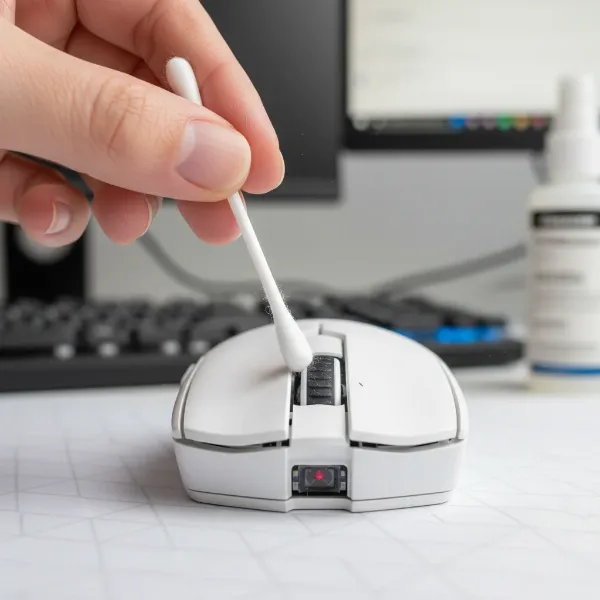
The Apple Magic Mouse 3, in 2026, remains a polarizing yet integral part of the macOS experience. Its unparalleled multi-touch gestures and seamless integration make it unique, but its ergonomic design and infamous charging port continue to challenge users. For dedicated macOS users prioritizing gesture control, it’s still a strong contender, though not without its compromises.

Introduction: The Magic Mouse in 2026
The digital landscape evolves rapidly, yet some devices maintain their iconic status. The Apple Magic Mouse, now in its assumed third iteration by 2026, continues to be a go-to input device for many macOS users. This review explores whether its unique blend of design and functionality still holds up against a competitive and increasingly ergonomic market.
What Makes the Apple Magic Mouse 3 Unique for macOS in 2026?
Design and Ergonomics: A Familiar Yet Evolved Form
|
Our Picks for the Best Computer mouse in 2026
As an Amazon Associate I earn from qualifying purchases.
|
||
| Num | Product | Action |
|---|---|---|
| 1 | Amazon Basics 2.4 Ghz Wireless Optical Computer Mouse with USB Nano Receiver, Black |

|
| 2 | Amazon Basics 3-Button USB Wired Mouse with Responsive Tracking, Plug & Play, Compatible with Windows and Mac, Black |
|
| 3 | Redragon M997 Magnesium Alloy Wireless Gaming Mouse, Tri-Mode BT & 2.4GHz, Ultra Lightweight Ergonomic Mouse, 1000Hz, Rechargeable for PC Laptop, Starlight Black |
|
| 4 | TECKNET Ergonomic Mouse, Wireless Vertical Mouse, 4800 DPI, Rechargeable Bluetooth Mice for Carpal Tunnel Right Hand, 3-Device Connectivity for Laptop, PC, MacBook, Black |
|
| 5 | acer Wireless Mouse for Laptop, 2.4GHz Computer Mouse 3 Adjustable DPI Office Cordless USB Mice with USBA Receiver, 6 Buttons, 1600 DPI, Medium to Large Sized Hands Compatible with PC, Laptop, Desktop |
|
| 6 | Logitech M185 Wireless Mouse, 2.4GHz with USB Mini Receiver, 12-Month Battery Life, 1000 DPI Optical Tracking, Ambidextrous PC/Mac/Laptop - Swift Grey |
|
| 7 | Logitech MX Master 4, Ergonomic Wireless Mouse with Advanced Performance Haptic Feedback, Ultra-Fast Scrolling, USB-C Charging, Bluetooth, Windows, MacOS - Graphite |
|
| 8 | Wireless Bluetooth Mouse, Rechargeable, LED, Silent, Ultra-thin Design (Bluetooth 5.2 and 2.4GHz USB Receiver) | Portable Computer Mouse for Laptops, iPads, MacBooks and Apple Devices (Black) |
|
| 9 | Logitech M510 Wireless Mouse, 2.4 GHz with USB Unifying Receiver, 1000 DPI Laser-Grade Tracking, 7-Buttons, 24-Months Battery Life, PC/Mac/Laptop - Graphite |
|
| 10 | Logitech B100 Wired Mouse for Computer and Laptop, USB Corded Mouse, Right or Left Hand Use - Black |
|
The Magic Mouse 3, much like its predecessors, retains its distinct low-profile, symmetrical design. Crafted from smooth, durable plastic with an aluminum base, it feels solid and premium. Its flat, minimalist aesthetic perfectly complements Apple’s hardware ecosystem, seamlessly blending with MacBooks and iMacs. However, this design, while visually appealing, remains a point of contention regarding ergonomics. Users with larger hands or those prone to wrist strain might find its low profile less comfortable during extended use, necessitating a “claw” grip. Apple’s commitment to this form factor suggests a prioritization of aesthetic integration and multi-touch functionality over traditional ergonomic curves.
Multi-Touch Gestures: The macOS Advantage
This is where the Magic Mouse 3 truly shines and differentiates itself. Its entire top surface acts as a multi-touch trackpad, enabling intuitive, fluid gestures deeply integrated with macOS. Swiping between desktops, scrolling through documents with natural momentum, pinching to zoom, and invoking Mission Control are all executed with remarkable precision and smoothness. No other mouse offers this level of native, system-wide gesture control. For professionals in creative fields, casual browsers, or anyone deeply embedded in the macOS workflow, these gestures become second nature, significantly enhancing productivity and navigation. The responsiveness and accuracy of these gestures are unparalleled by third-party alternatives, making it a powerful tool for navigating complex interfaces.
Connectivity and Battery Life: Seamless Apple Ecosystem Integration
The Magic Mouse 3 continues Apple’s tradition of effortless connectivity. Pairing is instantaneous via Bluetooth, automatically linking to your Mac the moment it’s powered on. By 2026, we expect it to leverage Bluetooth 5.2 or newer, ensuring robust, low-latency connections and improved power efficiency. Charging is now universally via USB-C, a welcome upgrade that aligns with Apple’s broader device ecosystem. While the infamous charging port on the bottom persists, requiring you to flip the mouse over and pause use, battery life is robust. Expect several weeks of typical use on a single charge, with a quick top-up providing hours of operation, making the charging inconvenience less frequent but still present when it occurs.
How Does the Magic Mouse 3 Perform in Everyday macOS Workflows?
Productivity and Creative Tasks: Precision and Control
For most general productivity tasks – browsing, email, word processing, and spreadsheet work – the Magic Mouse 3 performs exceptionally well. Its optical tracking is precise, allowing for accurate cursor placement and selection. The multi-touch scrolling, with its natural momentum, feels incredibly fluid when navigating long documents or web pages. For light graphic design, photo editing, or video editing, the gestures can be a real asset, allowing quick canvas navigation and zooming. The seamless integration with macOS means every gesture feels native and responsive, enhancing the overall user experience.
Gaming and Intensive Applications: Where it Falls Short
Despite its strengths, the Magic Mouse 3 is not designed for every use case. For serious gaming, its flat profile, lack of customizable buttons, and lower polling rate compared to dedicated gaming mice make it a poor choice. Competitive gamers require specific ergonomic shapes, multiple programmable buttons, and ultra-low latency, features the Magic Mouse 3 simply does not offer. Similarly, for users engaged in highly intensive CAD work or complex 3D modeling that demands many programmable macros and a specific ergonomic grip for hours, the Magic Mouse 3 falls short. Its strength lies in its macOS integration, not raw performance metrics for specialized high-demand applications.
macOS Sonoma and Beyond: Software Integration
The Magic Mouse 3’s true power is unlocked through its deep integration with macOS Sonoma and subsequent versions. Apple continuously refines its gesture recognition and system-level interactions. This means the Magic Mouse 3 isn’t just a peripheral; it’s an extension of the operating system itself. New macOS features often leverage its multi-touch capabilities, ensuring a cohesive and intuitive user experience that third-party mice cannot fully replicate. Updates to macOS often bring subtle improvements to gesture recognition, tracking accuracy, and overall responsiveness, keeping the Magic Mouse 3 feeling current with the latest software innovations.
Magic Mouse 3 vs. The Competition: What are the Best Alternatives for macOS Users?
Trackpads and Ergonomic Mice: A Diverse Landscape
The market for input devices catering to macOS users is diverse in 2026, offering alternatives for every preference. The Apple Magic Trackpad 3 is the most direct competitor, offering an even more expansive multi-touch surface and superior ergonomics for many. For those prioritizing comfort and advanced functionality, ergonomic mice from Logitech and Microsoft remain popular. These often feature sculpted designs, thumb rests, and numerous programmable buttons, catering to power users and those with specific ergonomic needs. Vertical mice are also gaining traction for reducing wrist strain.
| Feature | Apple Magic Mouse 3 | Logitech MX Master 3S (2026) | Apple Magic Trackpad 3 | ErgoVertical Mouse (Generic) |
|---|---|---|---|---|
| Design & Ergonomics | Sleek, flat, symmetrical. Polarizing comfort. | Sculpted, right-handed ergonomic. Thumb rest. | Large, flat glass surface. Excellent for gestures. | Vertical handshake grip. Reduces pronation. |
| Multi-Touch Gestures | Full macOS native gestures on surface. | Limited custom gestures via software. | Full macOS native gestures, Force Touch. | Basic scrolling/click. No advanced gestures. |
| Buttons & Controls | Single clickable surface (software-defined). | 7 programmable buttons, scroll wheels. | No physical buttons, Force Touch clicks. | Standard 3-5 buttons. |
| Connectivity | Bluetooth 5.2+, USB-C charging. | Bluetooth LE, Logi Bolt USB receiver, USB-C. | Bluetooth 5.2+, USB-C charging. | Bluetooth or USB receiver. |
| Charging & Battery | USB-C on bottom. Weeks of use. | USB-C on front. Months of use. | USB-C on back. Weeks of use. | AA/AAA batteries or USB-C. |
| Target User | macOS users valuing native gestures & aesthetics. | Power users, creators needing comfort & customization. | macOS users prioritizing gestures & trackpad feel. | Users with wrist pain, ergonomic focus. |
Is the Magic Mouse 3 the Right Choice for Your macOS Setup in 2026?
Who Benefits Most?
The Magic Mouse 3 is ideal for users deeply invested in the Apple ecosystem who value the seamless integration and intuitive multi-touch gestures above all else. Casual users, students, and professionals who primarily browse, write, or engage in light creative work will find its functionality enhances their macOS experience. Minimalists who appreciate its clean design and those who frequently switch between Macs will also find its instant pairing and consistent performance appealing. If you already love the Magic Mouse 2, the 3rd generation offers refined stability and modern charging without altering its core identity.
Who Should Look Elsewhere?
Conversely, the Magic Mouse 3 is not for everyone. Gamers require a mouse with a higher polling rate, dedicated buttons, and a more ergonomic grip for fast-paced action. Users suffering from wrist pain or carpal tunnel syndrome will likely find its flat profile uncomfortable during prolonged use; an ergonomic or vertical mouse would be a far better choice. Power users who rely on numerous programmable buttons, hyper-fast scrolling, or a more substantial grip for precision tasks might feel limited by its minimalist interface. If battery life during charging is a critical factor, the bottom-mounted port remains a frustration.
Key Considerations Before Buying
- Ergonomics: Can you comfortably use a flat, low-profile mouse for extended periods?
- Gesture Preference: Do you heavily rely on macOS’s multi-touch gestures for navigation?
- Primary Use Case: Is it for general productivity, creative work, or competitive gaming?
- Budget: Are you willing to pay a premium for Apple’s design and integration?
- Charging Port: Are you prepared for the inconvenience of the bottom-mounted USB-C port?
- Programmable Buttons: Do you need more than basic left/right click and gesture controls?
- System Integration: How much do you value seamless pairing and macOS-specific features?
Frequently Asked Questions
Is the Magic Mouse 3 compatible with older macOS versions?
Yes, the Magic Mouse 3 is designed for broad compatibility. While it will offer the best experience with the latest macOS versions like Sonoma and beyond, it will function perfectly with most recent macOS releases that support Bluetooth input devices, typically going back several years.
How long does the Magic Mouse 3 battery last on a single charge?
Expect the Magic Mouse 3 to last approximately 3-4 weeks on a single charge with typical daily use. Actual battery life varies based on usage intensity and environmental factors. Its efficient Bluetooth connectivity contributes to its excellent longevity.
Can I use the Magic Mouse 3 with a Windows PC or iPad?
The Magic Mouse 3 can connect to Windows PCs via Bluetooth, but its multi-touch gestures are largely unsupported, limiting its functionality to basic scrolling and clicking. It can also pair with iPads running iPadOS, offering basic cursor control, but again, advanced gestures are not fully translated, making it less ideal than a Magic Trackpad for iPad.
What are the common complaints about the Magic Mouse 3?
The most frequent complaints revolve around its ergonomics, which many find uncomfortable for prolonged use due to its flat profile. The placement of the USB-C charging port on the bottom, preventing use while charging, is another consistent criticism. Some users also desire more physical buttons or a higher polling rate for gaming.
Is the charging port still on the bottom?
Yes, by 2026, the Magic Mouse 3 maintains the design choice of placing the USB-C charging port on its underside. This means the mouse cannot be used while it is actively charging, a design quirk that has persisted across generations.
Conclusion
In 2026, the Apple Magic Mouse 3 remains a testament to Apple’s unique design philosophy. For macOS users who prioritize native multi-touch gestures, seamless system integration, and a minimalist aesthetic, it continues to be an unparalleled choice. While its ergonomic compromises and charging port location are persistent drawbacks, its strengths in the Apple ecosystem are undeniable. Ultimately, whether it’s “still the best” depends entirely on your personal preferences and workflow; for many, its magic endures.